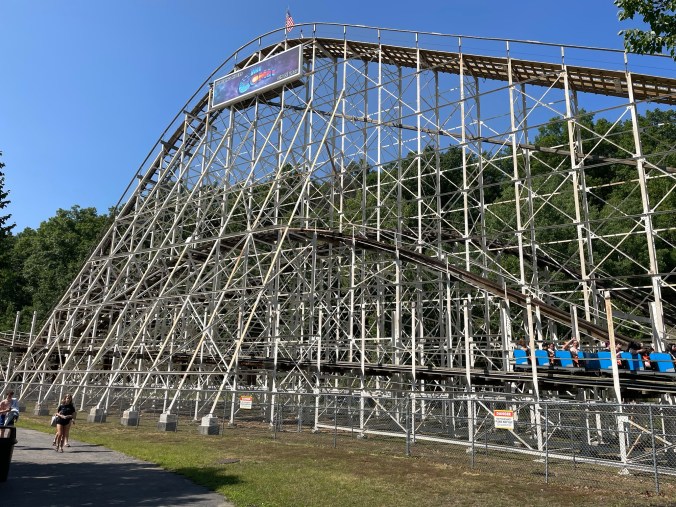
The Comet at Great Escape (formerly Six Flags and now Enchanted Parks) is a relocation from a shuttered park in Canada called Crystal Beach. The ride has a fascinating history in that it was also known as the Comet at Crystal Beach at the time of its closure, but in the early 1900’st it was known as the infamous Crystal Beach Cyclone, considered one of the most violent and terrifying rides ever built. It had a “modern” metal support structure with wooden tracks which allowed for more aggressive elements than would normally be seen on a wooden coaster. The layout featured no straight sections of track (except through the station), non-stop banked turns and drops and a sharp turn near the ground with a 90-degree bank that would cause many riders to temporarily pass out. The ride had 4-5 G’s of force, which some rides actually exceed today, but with G-force it’s not just about intensity, but duration as well. The Crystal Beach Cyclone would operate for 20 years before being shuttered, but its structure gave birth to a new and less intense coaster called the Comet that would eventually move from Canada to Great Escape in New York.
The Crystal Beach Cyclone was so intense that the park reportedly kept a full-time nurse stationed at the unloading platform to assist riders who fainted or suffered minor injuries like bloody noses and whiplash.
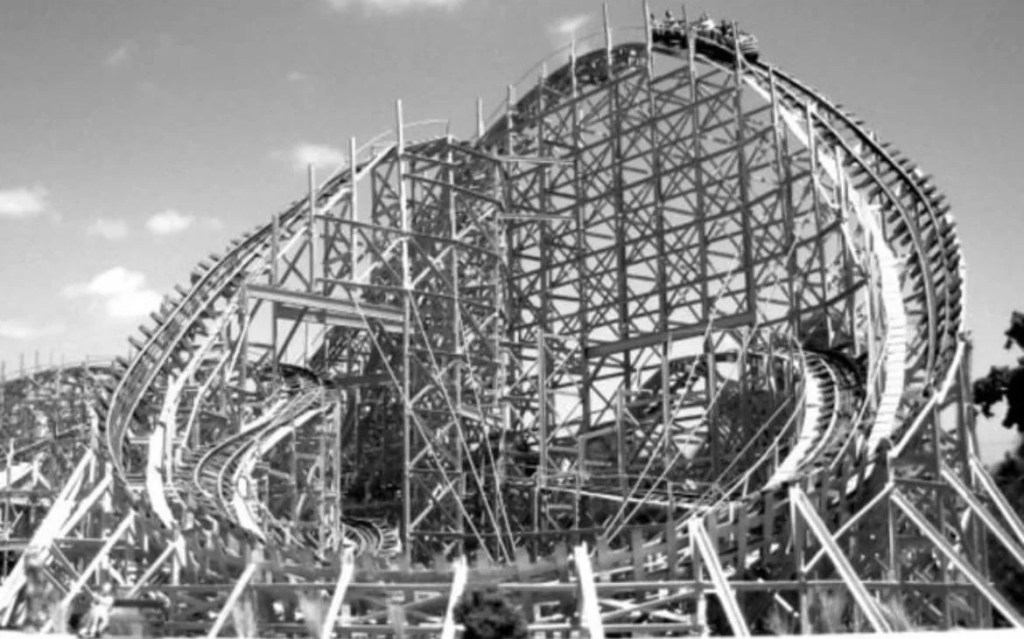
The Cyclone’s predecessor, the Crystal Beach Cyclone was designed by Harry Traver and opened in 1927. It was known as one of the “Terrifying Triplets” with the others being the near identical Lightning at Revere Beach and the Cyclone at Palisades Amusement Park. The legend is that the Crystal Beach Cyclone was so intense that the park reportedly kept a full-time nurse stationed at the unloading platform to assist riders who fainted or suffered minor injuries like bloody noses and whiplash. The ride safety issues and maintenance costs eventually lead to the coaster being permanently closed and dismantled in 1946. However, some of its steel framework was salvaged to construct another famous coaster at the park named the Comet. The Comet would run from 1948 until 1989 when Crystal Beach closed. It was bought at auction for $210,000 and stored for several years before being completely rebuilt and reopening on June 25, 1994, at Great Escape. What’s great to see is that Great Escape embraces this history with a sign in the station, telling the story of this great coaster. I also found it ironic that on the day of my visit there were water dummies present for testing, something that certainly wasn’t a thing in the Crystal Beach Cyclone days!
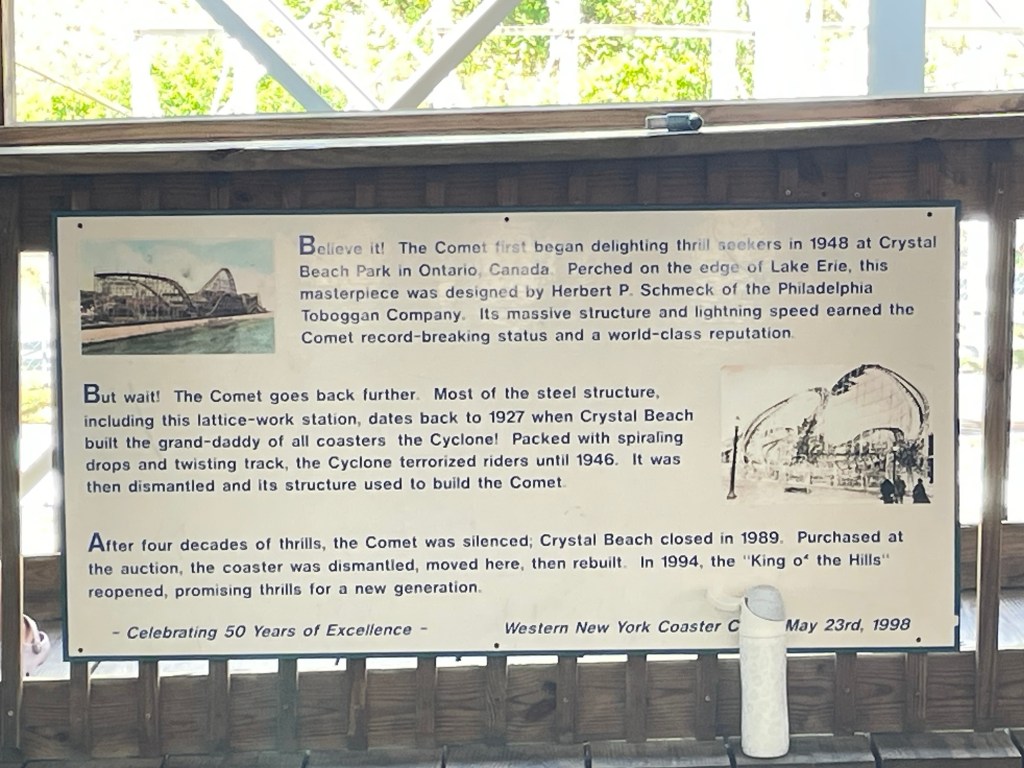
It’s interesting to think about the public reaction to the Crystal Beach Cyclone and if it was similar to that of something like X2 at Magic Mountain today? X2 has been the subject of many injury claims and even a wrongful death claim that was recently settled. I would imagine Crystal Beach leaned into the danger as a form of marketing, but the early 1900’s was a far different time with regard to lawsuits and safety regulations. The Comet at Great Escape is not the infamous Crustal Beach Cyclone and therefore we’d call it an 80 year old coaster rather than a 100 year old coaster next year, but its existence is probably owed in part to it. According to Great Escape there are still significant remnants of the Crystal Beach Cyclone still left in the structure today including most of the steel structure and the station. Many of the rides at Great Escape have a fascinating history including a former Opryland coaster, a Busch Gardens Van Nuy log flume and a coaster from a former amusement park in New Orleans. The Crystal Beach Cyclone is something of a legend today, but it quietly lives on without many riders knowing unless they read the sign in the station.

