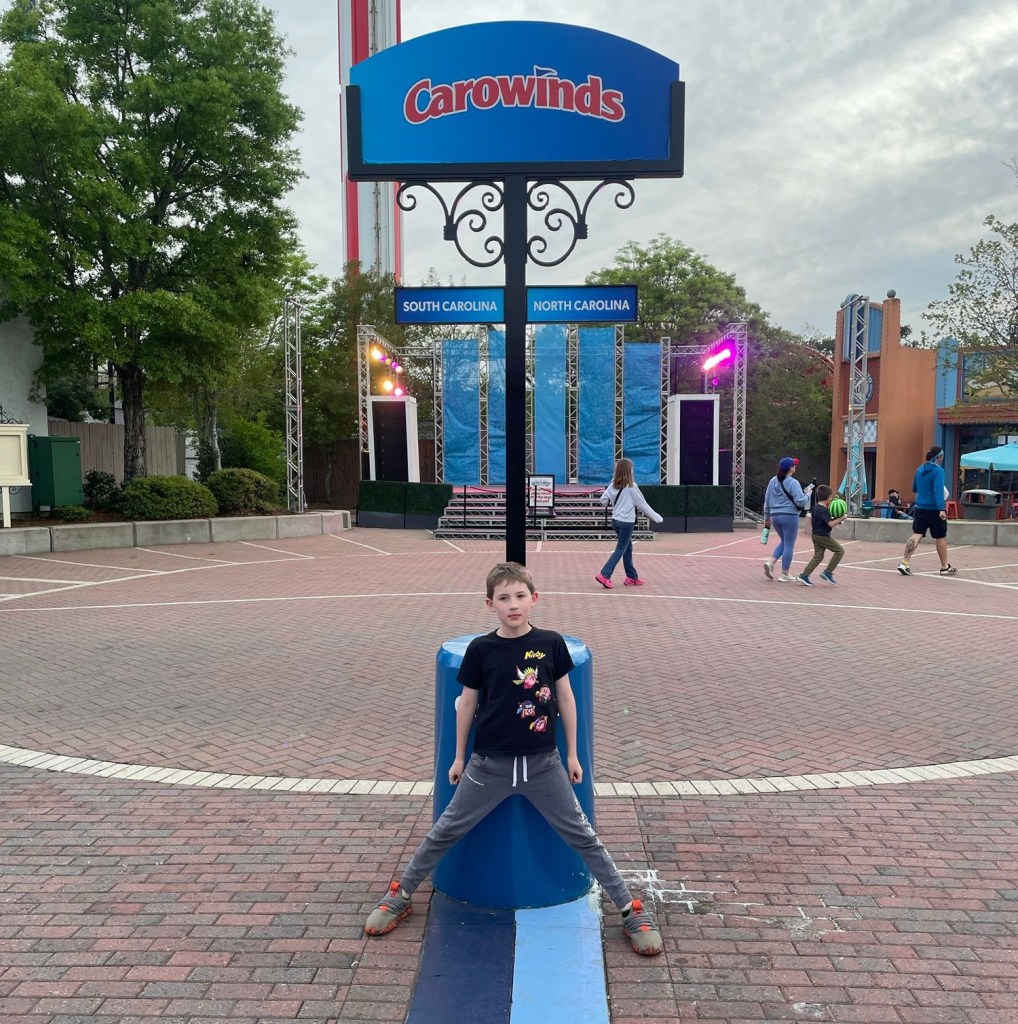
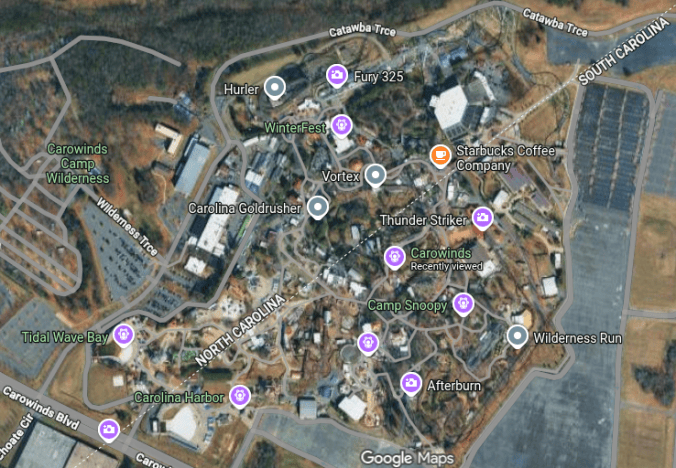
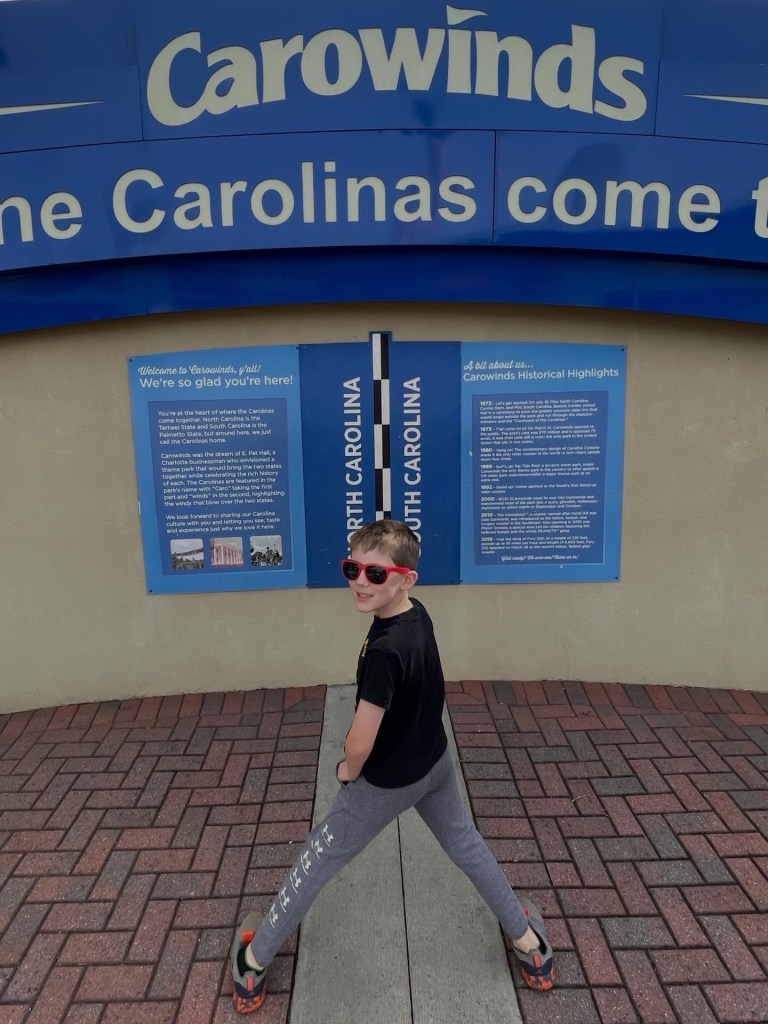
If you visit Carowinds you’ll constantly hear the phrase, “where the Carolinas come together” when exiting a ride. That’s because the park actually straddles the border between North Carolina and South Carolina and you’ll find yourself crisscrossing states all day, sometimes on a single ride! There’s a pair of blue lines painted throughout the park that mark the border that comes out through the front entrance. However, there are some significant quirks Carowinds has to deal with due to its location and differences between its two home states.
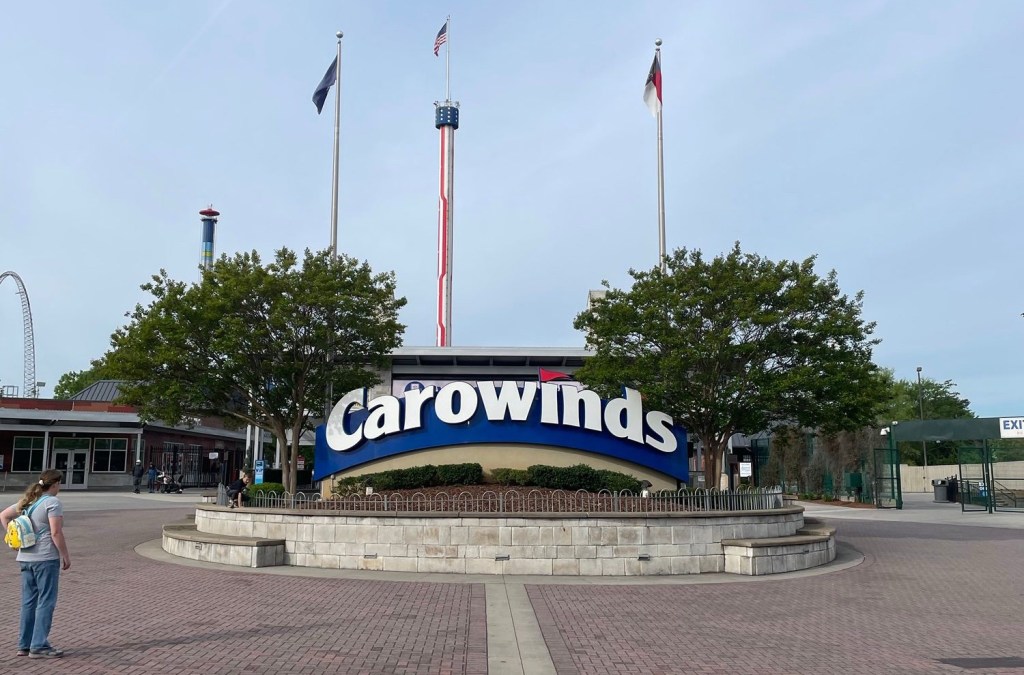
Carowinds was founded by Charlotte businessman Earl Patterson Hall after being inspired by a trip to Disneyland and wanting an attraction to bridge North and South Carolina. The name is an amalgamation of “Carolina” and the “winds” characteristic to the region. The park opened in 1973 and struggled basically out of the gate due to the oil crisis that year and underwent several ownership changes before being bought by Cedar Fair in 2006.
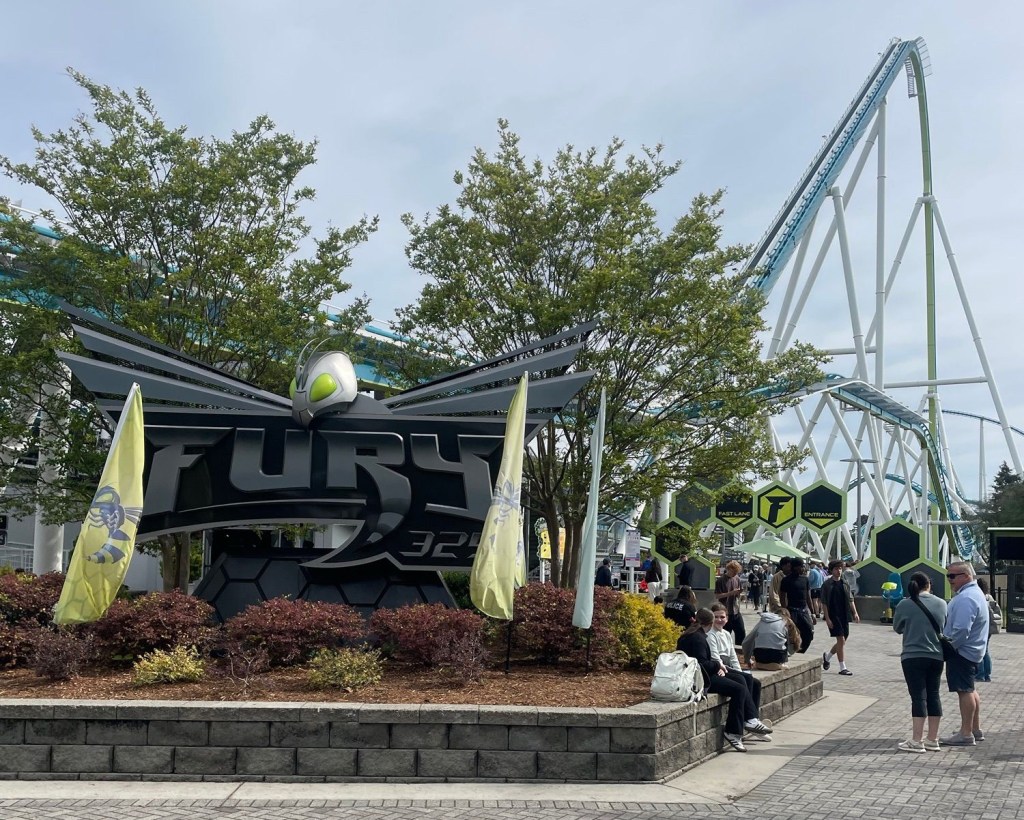
Carowinds essentially has to function as two separate business entities for tax purposes. Employee payroll taxes, sales taxes collected and corporate revenue are split and reported to either Raleigh (NC) or Columbia (SC) depending on the exact coordinates of the point of sale. The sales tax rate in Mecklenburg County, NC (the North Carolina side of the park) is 8.25%, while the sales tax rate in York County, SC (the South Carolina side of the park) is 7.0%. Therefore a Coke purchased near Fury 325 station (North Carolina) pay slightly more sales tax than one near Copperhead Strike station (South Carolina), probably about a nickel difference. The park needs to not only keep track of total sales for tax purposes, but where in the park they occurred to pay each state their appropriate share. Other state differences related to employment taxes, unemployment benefits and work rules must also be considered.
The sales tax rate in Mecklenburg County, NC (the North Carolina side of the park) is 8.25%, while the sales tax rate in York County, SC (the South Carolina side of the park) is 7.0%.
For things like ride regulations and inspections this is dictated by the state where the ride is located. If a ride is located on the North Carolina side, the North Carolina Department of Labor (NCDOL) regulates the ride and if the ride is located in South Carolina side, the South Carolina Department of Labor, Licensing and Regulation (LLR) is responsible. For roller coasters and rides that cross state lines, the state where the ride’s station and control panel are located governs its safety inspections and regulatory oversight.
States also vary in laws, especially with alcohol. Across the park you will find different types of alcoholic beverage availability and varying sales hours depending on which side of the state line you are purchasing from. The laws related to distribution must also be followed, taxes paid and servers appropriately credentialed. If a location runs out of beer on one side of the park it may not be a simple matter to move product to the other side as the inventory must be kept separate.
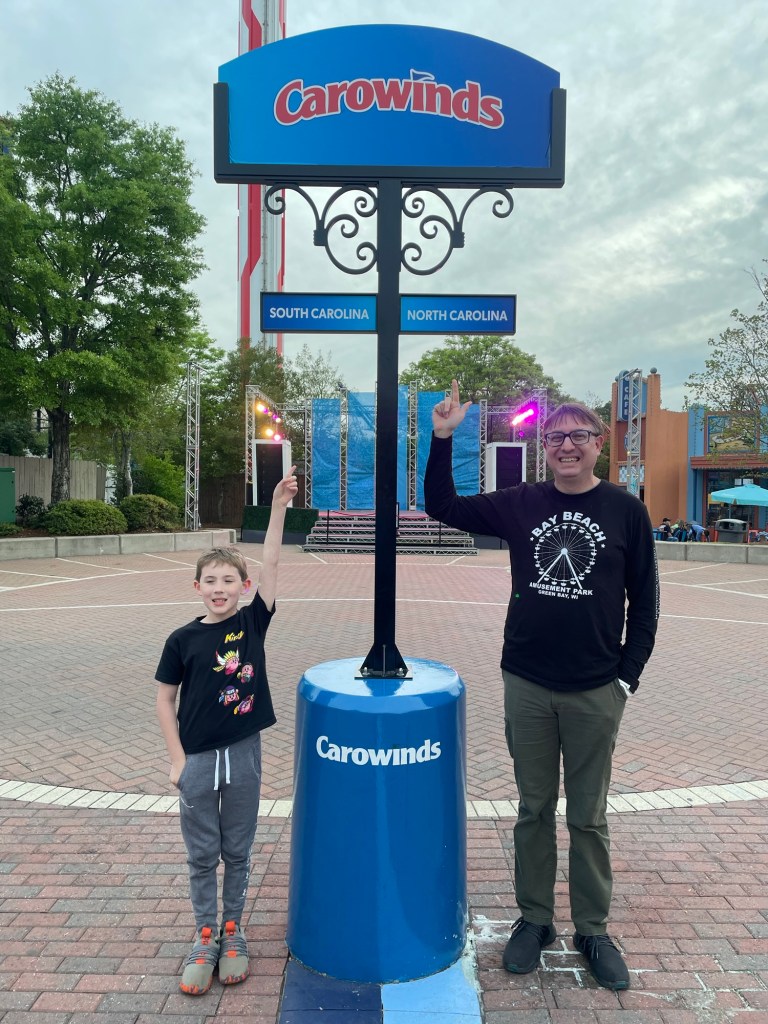
Despite the dual location, general visitor rules like the Carowinds Code of Conduct, ticket requirements, and security procedures apply uniformly across the entire property regardless of which side of the painted border line you are standing on. This does provide some unifying rules and regulations across the park. It can’t be easy to operate under two sets of rules and regulations with two sets of paperwork, but Carowinds has made it work. The next time you go to the park look around for stickers and signs on rides and food service or sales tax on your receipt to see this fascinating system at work.

