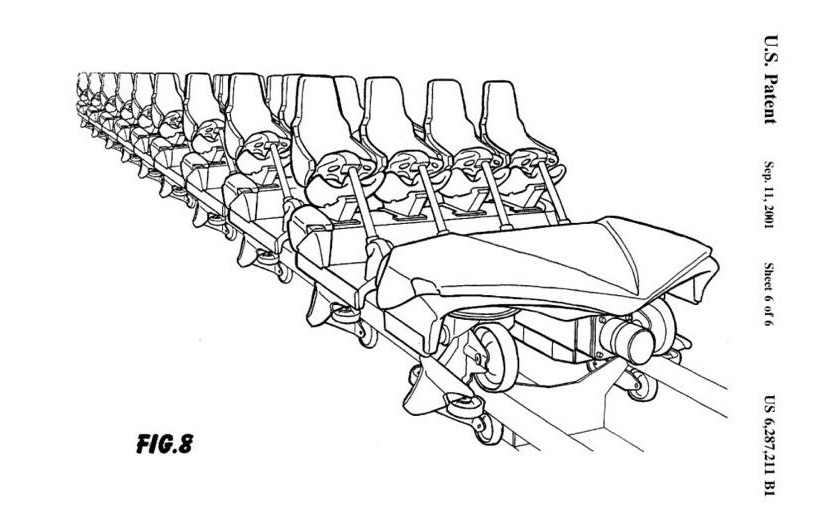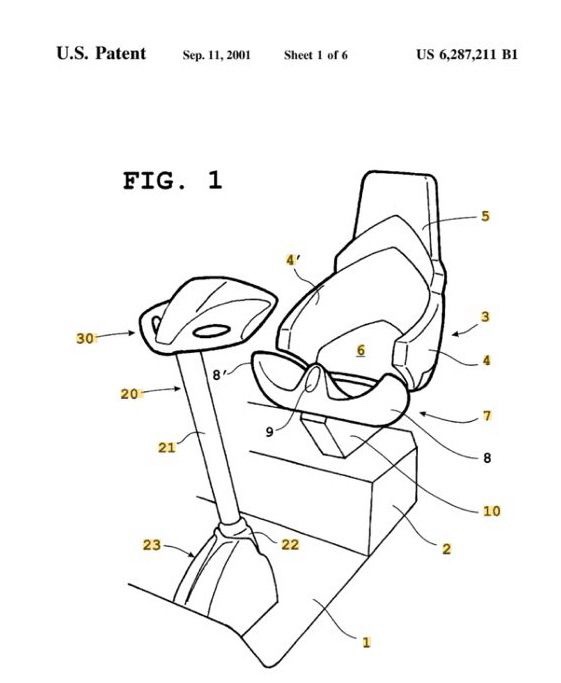
Incredibly sad news out of Six Flags Over Georgia as it’s being reported one man was killed after being ejected from Goliath, the B&M hyper coaster. Many news outlets have posted pictures of people being evacuated from the lift hill, but insiders I know said the incident was actually on the bunny hills on the return. The next train was stopped on the lift and they thus needed evacuate people there. The details I heard sound horrific though and appear to have been captured by the ride camera, but I’ll spare all the details. We have zero idea the cause of the incident at this point, but generally it’s between mechanical failure, control system failure, poor maintenance, ride operations error (either overriding a safety system or allowing someone to ride who shouldn’t) or rider behavior. Early reports are often wrong (see the Stardust Racers incident earlier this year), but there is some speculation already as to if rider characteristics contributed to this incident. Initial attention has been placed on the restraint since there was an ejection. B&M has a patent on their clamshell restraint and I wanted to provide some technical information about it here.
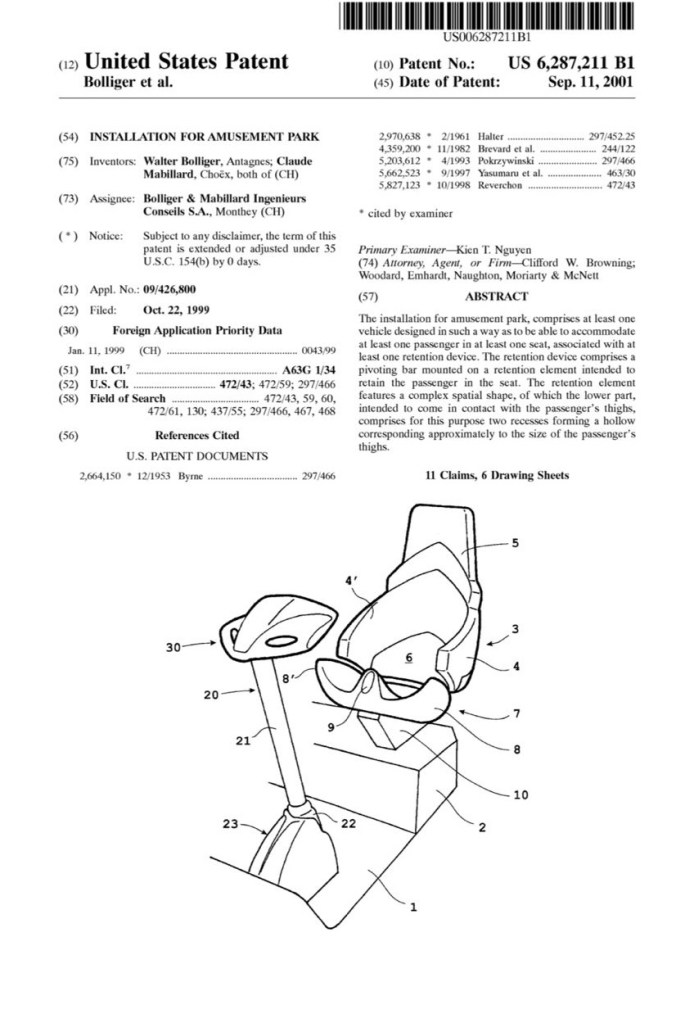
The B&M patent basically covers the externals of the restraint, but the internal design a features a standard ratcheting technology proven over decades. The ratcheting system that locks into position one click at a time as the bar lowers and typically requires a minimum number of clicks before the control system will allow the train to dispatch. Each seat features proxy and limit switches communicating restraint status back to the station control system. B&M uses a highly redundant, multi-pawl mechanical ratcheting system with a “tooth and claw” drum ratchet. To meet strict safety redundancy codes, B&M uses multiple offset locking pawls (often operating in pairs or sets of four). These alternate allowing for “half stops” with the added benefit of greater adjustability for different body types. According to Ryan the Ride Mechanic, if a primary pawl falls exactly between teeth or fails to fully seat, a secondary backup pawl immediately drops behind it to trap the gear. This prevents a “slipped ratchet” from letting the bar release. When the train returns to the station metal tracks called platens push up against a mechanism to release it so riders can push the bars open.
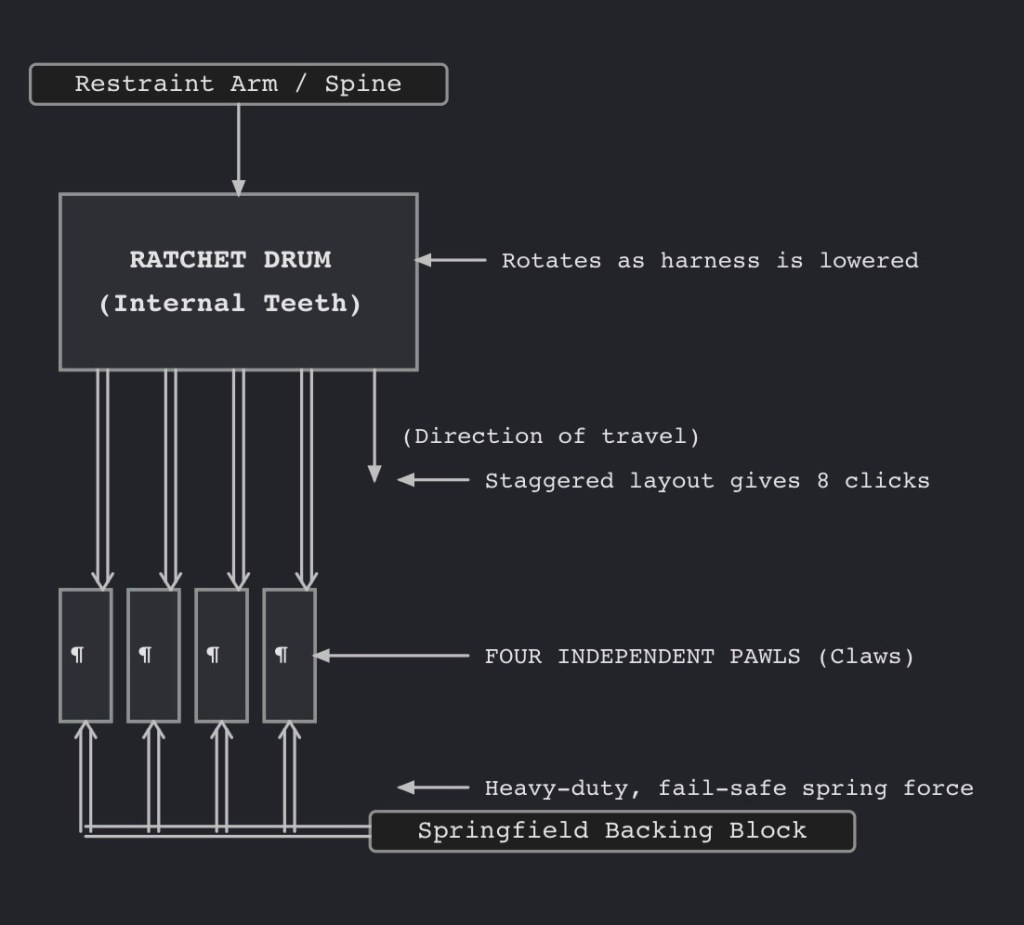
A lot of people are already talking about the fact that Goliath doesn’t have seatbelts and just the single lap bar. Seatbelts were added to Behemoth and Leviathan at Canada’s Wonderland, Diamondback and Orion at Kings Island, and Thunder Striker and Fury 325 at Carowinds. However, the “clamshell” restraints are very complex with multiple redundancies so that a single point of failure shouldn’t cause them to open.
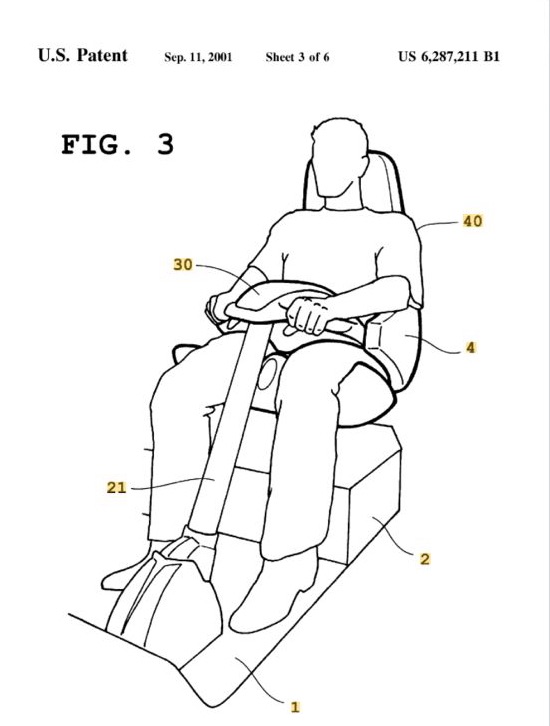
This restraint system was introduced in 1999 on Apollo’s Chariot at Busch Gardens Williamsburg and has been a hit with riders. The open body system maximizes the floating airtime sensation and also allows for quick station operations. Although they appear like a single restraint they are designed with redundancy so no one point of failure can cause them to open. Admittedly it was always a bit weird that some versions also have seatbelts likely due to different state regulations. It’s still early so no judgement is passed here, just some information on the restraints themselves since they’re getting a lot of attention.